
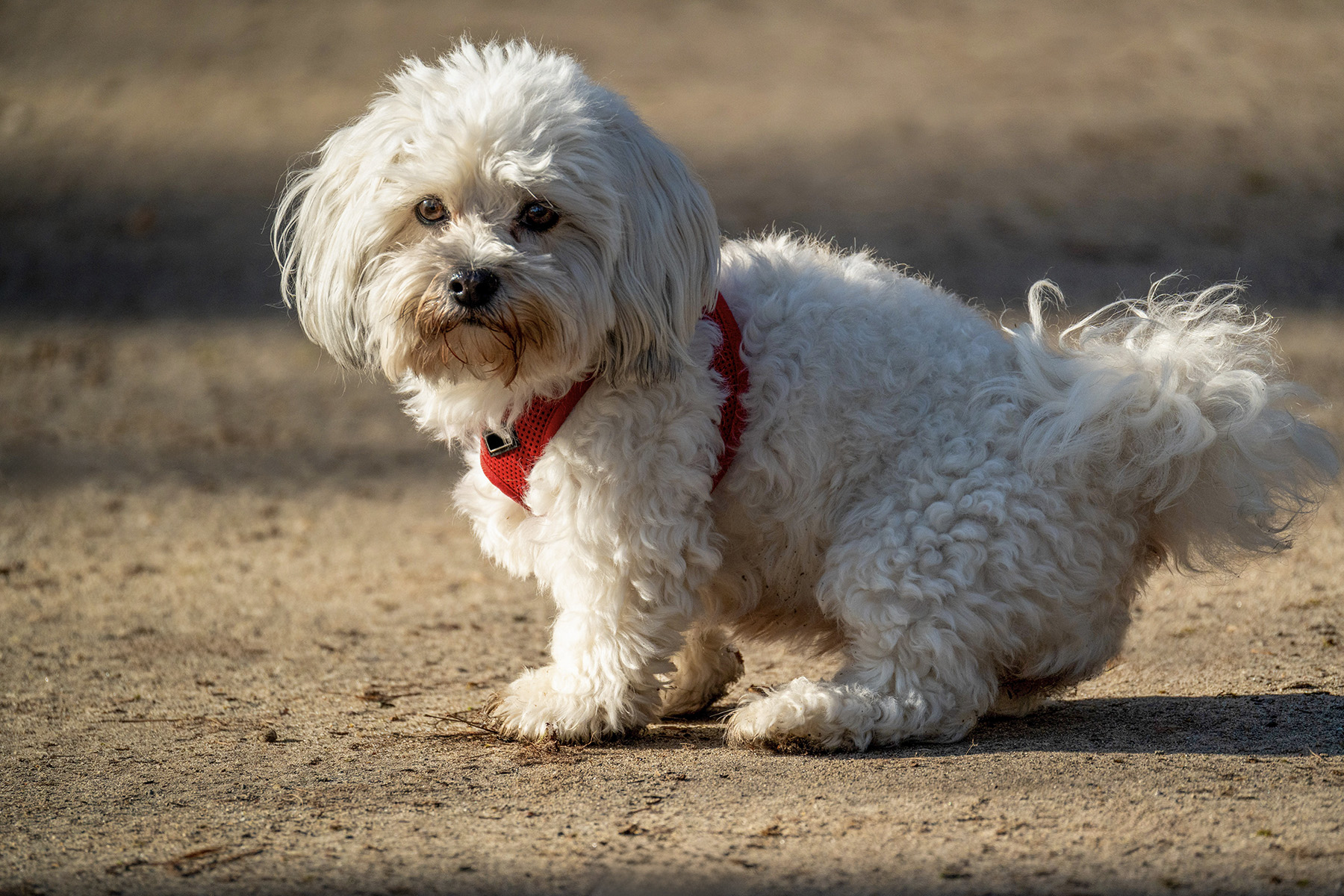
The standard advice for toy breeds is that they need almost nothing. A tiny dog, a tiny apartment, a squeaker from the bargain bin, and the exercise problem is solved. It is a comforting story, and it is wrong.
Toy breeds are some of the brainiest dogs per pound in the canine world. Poodles, Papillons, Pomeranians, the terriers: dogs bred to work, hunt, and solve problems, now living in condos where the biggest decision of the day is which cushion to nap on. Without a job, they invent one, usually barking at the mail carrier, shredding the remote, or rehearsing anxiety every time you leave the room. That is where the best toys for small dogs come in. Not as entertainment, but as employment.
Enrichment is anything that makes a dog use its brain, nose, or paws to solve a small problem for a reward. For a big dog with a yard, enrichment is bonus time. For a four-pound Maltese in a Boca Raton high-rise, where walks shrink to dawn and dusk for half the year, enrichment is how the dog gets its daily work done.
Toy breeds get labeled “low energy” because they tire quickly on walks. A Yorkie who walks twenty minutes and naps is still mentally wide awake at 8 p.m., and an idle terrier brain finds trouble.
The complaints we hear most about small dogs, demand barking, chewing baseboards, pestering the cat, following you room to room, are usually not temperament problems. They are boredom problems. A ten-minute puzzle session before dinner can do more for a barky Pomeranian than a second walk in the Florida heat.
A useful conversion: roughly fifteen minutes of nose work tires a small dog about as much as thirty minutes of walking. Thinking is expensive for a brain that size. On the many South Florida afternoons when the pavement is too hot for paws and the air is too thick for a walk, indoor enrichment is not a nice extra. It is the exercise plan.
Three rules keep tiny dogs safe, and they matter more for a five-pound dog than a fifty-pound one. A hazard a Labrador would cough up can block a Chihuahua’s airway.
Hold the toy up to your dog’s muzzle. If the entire thing could disappear inside the mouth, it is a choking risk, not a toy. For teacup puppies under three pounds, that rules out most standard “small” toys, which are really sized for dogs up to fifteen pounds. Look for toys labeled extra-small or made for dogs under five pounds. A toy that is slightly too big is clumsy. A toy that is slightly too small is dangerous.
Squeaky plush toys are the classic toy-breed favorite: play together, then the toy goes on the shelf. The danger is the unattended chewer who works the squeaker out of the seam and swallows it. If your dog is a de-stuffer, plush toys are supervised-only. No exceptions.
Check seams, rope ends, and rubber toys weekly for pieces coming loose. If a piece can be torn off, it will be torn off, and then swallowed. Retired toys go in the trash, not the donation bin.
This is where the best toys for small dogs separate from the bargain bin. All six categories work for toy breeds, provided you buy the right size and follow the safety rules above.
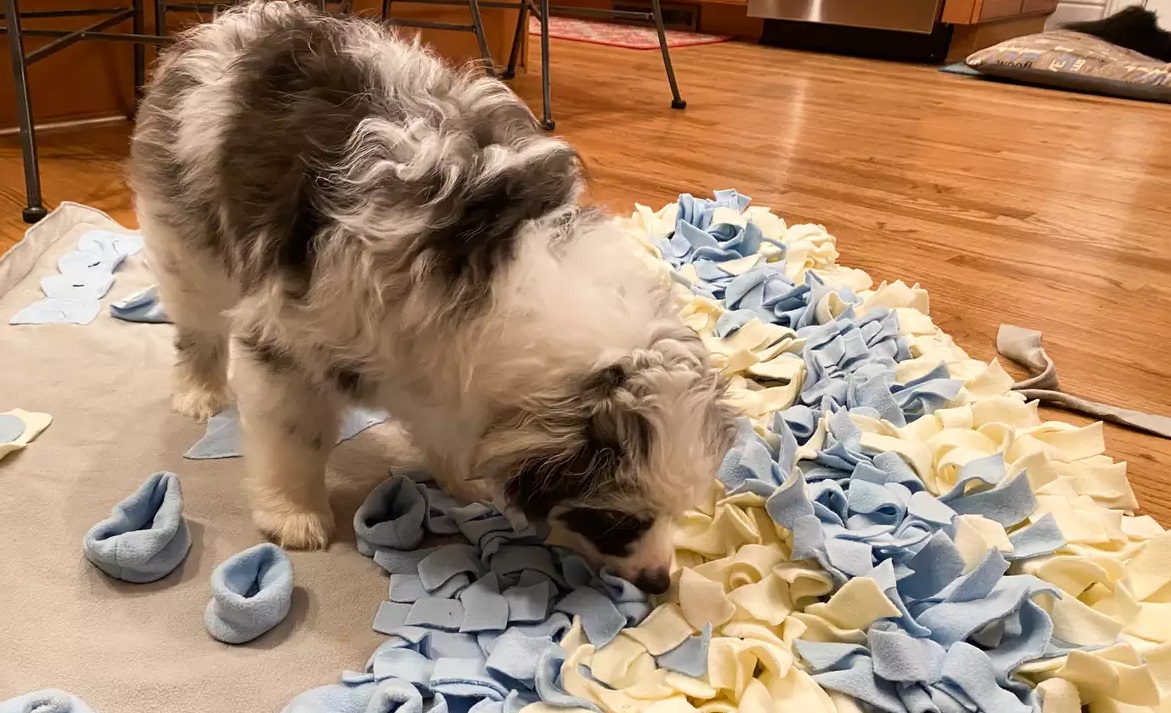
A snuffle mat is a rubber base with fleece strips tied through it. Scatter kibble into the folds and the dog sniffs it out. Ten minutes of snuffling works the nose the way a walk works the legs, and it is nearly impossible to get wrong. Prices run $12 to $25. Buy small or medium; the large ones are designed for Labradors and your dog will disappear into one. Machine-wash weekly; drool and treat grease build up fast.
Hard plastic or rubber balls with an adjustable opening that drops kibble as the dog rolls them. They turn breakfast into a twenty-minute activity. The catch for tiny dogs: most are sized for medium dogs, and a ball that is too heavy just sits there while your three-pound puppy stares at it. Look for balls under two and a half inches in diameter, and start with the opening on its widest setting so the dog wins early. $8 to $18.
A silicone mat with ridges that you smear with peanut butter, plain pumpkin, or wet food. Licking is self-soothing, and ten minutes on a lick mat settles a puppy the way a chew settles a teething toddler. For toy breeds, buy the small size and use a thin smear. A tablespoon of peanut butter is about 100 calories, half the day’s treat budget for a five-pound dog. Freeze the smeared mat for an hour to double the working time. $6 to $12, and they last for years.
Boards with sliding covers, flip lids, and hidden compartments. Excellent for the clever breeds, Toy Poodles and Papillons especially, but start at level one. A puzzle that is too hard on day one teaches the dog that puzzles are frustrating, and the dog quits. Supervise every session, because a determined terrier will chew the board itself if the treats do not appear fast enough. $15 to $30 for the small sizes.
Many toy breeds carry a plush toy around like a security blanket, and there is nothing wrong with that. Buy them small, with reinforced seams, and treat them as comfort objects and fetch toys rather than chew toys. When the squeaker works loose or the stuffing shows, the toy is done. Budget $5 to $12 each and expect to replace them every few months for enthusiastic chewers.
Chewing is a core need, especially for puppies between twelve and twenty-four weeks when adult teeth are coming in. The right chew is soft enough to dent with your thumbnail and small enough to hold between the paws. Thin bully sticks, collagen sticks, and small rubber chew toys all work. Skip anything you cannot dent with your thumbnail, antlers and marrow bones included. Tiny teeth chip on hard chews more easily than big teeth do. And never leave a puppy alone with a chew that is getting small enough to swallow.
A teething twelve-week-old teacup Yorkie, a senior Maltese with worn teeth, and a high-drive Miniature Pinscher need different tools.
For puppies under six months, prioritize softness. Teething gums are sore, and a puppy that learns chewing hurts will chew less, not more carefully. Soft rubber, plush toys, and lick mats are the rotation.
For seniors, prioritize ease. Older toy breeds often have dental work or missing teeth, and a puzzle that demands hard biting is frustrating. Snuffle mats and lick mats ask for nose and tongue, not jaw strength.
For the clever breeds, Toy Poodles, Papillons, Miniature Schnauzers, rotate difficulty upward. These dogs solve a level-one puzzle in two days and get bored. Keep two puzzle toys and swap them weekly so neither becomes furniture.
Nobody puts this on the packaging, but every treat-dispensing toy, snuffle mat, and lick mat delivers calories, and toy breeds have almost no calorie budget to spare.
Treats, including everything dispensed by toys, should stay under ten percent of daily calories. A five-pound adult dog on a typical small-breed food needs roughly 200 calories a day. Ten percent is 20 calories: about a tablespoon of peanut butter, or roughly fifteen pieces of training kibble. Two heavy snuffle-mat sessions can blow the whole budget before dinner.
The fix is to feed from the toys, not on top of meals. Measure the day’s kibble in the morning, set aside a third for enrichment, and feed the rest as meals. The dog gets the same calories and twice the work. Weigh your dog monthly. A half-pound gain on a five-pound dog is a ten percent body-weight increase, the equivalent of about fifteen pounds on a person.
| Toy type | What it does for a toy breed | Size rule | Typical price |
| Snuffle mat | Nose work, slows fast eaters, calms anxious dogs | Small or medium mat; large swallows tiny dogs | $12 to $25 |
| Treat-dispensing ball | Turns meals into 20 minutes of work | Under 2.5 inches diameter; lightweight | $8 to $18 |
| Lick mat | Self-soothing; settles puppies at dinner time | Small mat, thin smear only | $6 to $12 |
| Puzzle board | Problem-solving for clever breeds | Level 1 to start; small compartments | $15 to $30 |
| Plush squeaky toy | Comfort object, fetch, bonding play | Extra-small; reinforced seams; supervised only | $5 to $12 |
| Tiny-jaw chews | Teething relief, jaw exercise | Dents with a thumbnail; trash it when swallowable | $8 to $20 |
Novelty is what makes enrichment work. A puzzle left on the floor for a month becomes a decoration. The system that works for busy owners:
Keep three or four enrichment toys in play and store the rest out of sight. Once a week, swap one or two. The dog rediscovers an old favorite every few weeks, and six to eight toys total run the rotation indefinitely.
A sample day for a toy-breed puppy:
That is roughly 40 minutes of mental work a day, which covers most toy breeds completely. Our guide to indoor games that keep a puppy mentally stimulated has more no-equipment ideas for the days the toy box feels stale.
Some toys do not scale down. Skip tennis balls (the felt abrades enamel and the size chokes tiny breeds; use small rubber balls instead), fraying rope toys (unraveling strings can block small intestines), rawhide (it swells when wet, and a swollen chunk can obstruct a tiny dog), toys with glued-on eyes or noses (they pop off and go straight into the mouth), and “indestructible” toys sized for power chewers (too heavy and too hard for tiny jaws).
When you are choosing gear, our breakdown of 10 things to consider when choosing the right toy for your pup walks through sizing and materials in more depth.
Finding the best toys for small dogs is not about buying the most toys. It is about buying the right sizes, rotating them so they stay interesting, and remembering that the calories inside count as food. Get the size right, supervise the chewers, and feed from the toys instead of on top of meals.
If you are still deciding which tiny companion fits your home, come meet the puppies at Waggs to Riches in Boca Raton. Our team will match you with a breed whose energy and chew style fit your life and send you home with the right first toys in the right sizes. Browse our available puppies and bring your questions.
How many enrichment toys does a toy breed need?
Six to eight total, with three or four in play at any time and the rest stored away. Rotate one or two weekly. More toys on the floor does not mean more enrichment; novelty does.
Can I leave my puppy alone with a puzzle toy?
No. Puzzle boards, plush toys with squeakers, and chews all need supervision for toy breeds. A puppy left alone with a puzzle will chew the puzzle itself, and a swallowed squeaker or chunk of rubber means an emergency vet visit. Snuffle mats are the only category most owners can leave down briefly, and even then, check the mat for damage regularly.
Are lick mats safe for teacup puppies?
Yes, with two conditions. Use a thin smear, not a thick layer, because a tablespoon of peanut butter is about 100 calories, a huge share of a tiny puppy’s day. And use the small size mat so the puppy is licking, not chewing the edges.
How do I clean snuffle mats and lick mats?
Machine-wash the snuffle mat weekly on gentle with mild detergent and air dry; treat grease and drool build up fast. Most silicone lick mats are dishwasher safe on the top rack. Rubber treat balls rinse clean with warm water, and a bottle brush reaches the inside.
Will treat-dispensing toys make my small dog gain weight?
Only if you add them on top of full meals. Measure the day’s kibble, set aside a third for enrichment toys, and feed the rest as meals. Keep all treats and toy-dispensed food under ten percent of daily calories, and weigh your dog monthly. A half-pound gain on a five-pound dog matters.
What size toy is safe for a dog under five pounds?
Bigger than the muzzle. Hold the toy up to your dog’s face; if the whole thing could fit inside the mouth, it is a choking hazard. Look for toys labeled extra-small or made for dogs under five pounds, and for teacup puppies, test every new toy under direct supervision first.
It doesn’t even smell like animals are in here! The store is so clean and the puppies are well kept.
~ Jessie Leon
Monday-Saturday 11-6
Sunday 12-4
Copyright © 2026 Waggs To Riches Pet Boutique. Developed by Wyne Technologies LLC .