
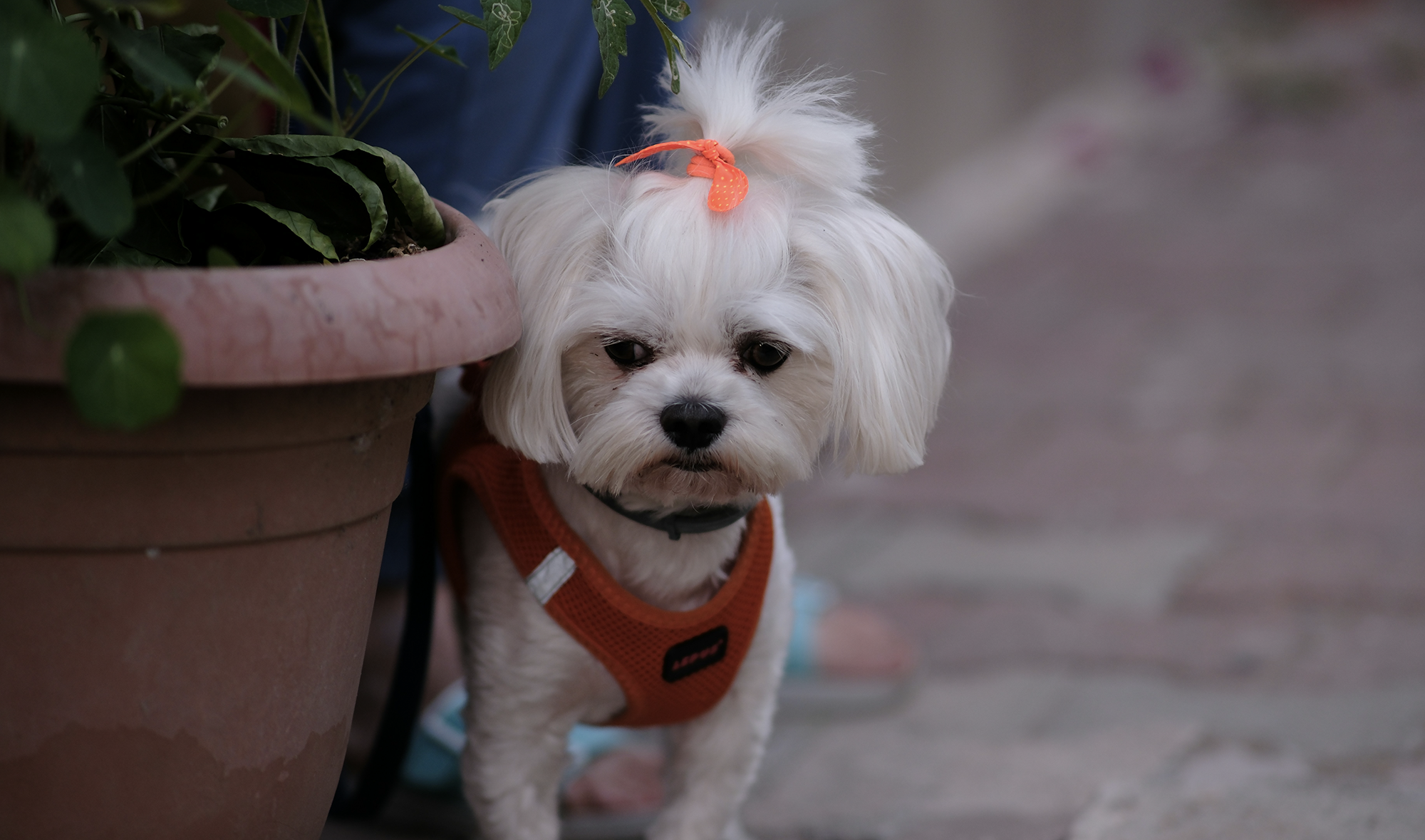
The standard puppy shopping list fails a teacup puppy in about nine places.
The crate is three times too big. The collar will not cinch small enough. The bowl is deep enough that a three-pound puppy has to put their whole head in. The kibble is too large to pick up. The toys are too dense for a jaw that size. The food bag assumes two meals a day, which for a teacup puppy is genuinely risky rather than merely suboptimal.
A proper small dog puppy checklist is not the regular list scaled down. Some items change entirely, a few become more important than they are for a larger dog, and two or three things on the standard list should be left on the shelf.
Teacup and toy breeds, generally meaning adult weights under seven pounds, have particular needs around blood sugar, body temperature, joint protection and feeding frequency. The gear follows from those needs. Here is the list that actually works, organized by what to buy before pickup day and what can wait.
Small, and smaller than instinct suggests.
An adult teacup puppy at four pounds needs enough space to stand, turn and stretch out fully. Nothing more. The reason this is not just about saving money: a puppy in an oversized crate will designate one corner as a bed and the opposite corner as a bathroom, which removes the entire mechanism that makes crate training work.
Eighteen to twenty-two inches is the right range. A wire crate with a plastic tray runs $35 to $50 at that size, and a divider panel is useful if you are starting with a very young puppy.
This is the most consequential item on the list.
Toy breeds, Yorkies and Pomeranians especially, carry an elevated risk of tracheal collapse, where the cartilage supporting the windpipe weakens over time. Repeated leash pressure on the throat is a recognized contributing factor. A collar should never be the leash attachment point on a dog this size.
Buy a step-in or vest-style harness that distributes pressure across the chest, with no tightening mechanism and no thin straps that concentrate force. $18 to $30.
Keep a narrow flat collar on your puppy at all times for the ID tag. Half an inch wide or less, extra-small, and check the fit weekly as the puppy grows. Never clip a leash to it.
Bowl depth matters more for a teacup puppy than for any other size of dog. A standard bowl requires a three-pound puppy to put their entire face below the rim, which is uncomfortable, and for a long-coated breed it means a soaked, food-caked chin after every meal.
Shallow, wide, low-sided, stainless steel. About $12 for a pair. Skip elevated stands entirely; at this height they serve no function.
This is the item people most often get wrong, and the consequences are the most serious on the list.
Teacup and toy breed puppies carry almost no fat reserves and have very fast metabolisms. The result is a genuine vulnerability to hypoglycemia, a drop in blood sugar that can cause weakness, trembling, disorientation and, in severe cases, collapse. The preventive measure is simple: feed three to four small meals a day and never let a young teacup puppy go more than five or six hours without food.
Buy a small-breed puppy formula. The kibble size is not a cosmetic detail; standard kibble is physically awkward for a mouth that small. Small-breed formulas also run higher in calories per cup, which suits a tiny stomach paired with a high energy requirement.
Keep whatever the puppy has been eating for the first two weeks. A new home plus new food reliably causes digestive upset, and you want to be able to tell stress apart from diet if something goes wrong.
Ask us what your puppy has been fed and how often. That single question saves a lot of guessing.
Not a regular household cleaner. Standard cleaners remove the mess but leave scent compounds a dog still detects, which flags the spot as an approved bathroom. Enzymatic cleaners break those compounds down. $15 for a gallon, and you will use it.
Worth genuinely considering for a teacup puppy in Boca Raton, for two reasons.
A three-pound puppy needs to relieve themselves every forty-five minutes or so when awake, and if you live in a condo several floors up, that logistics problem is significant. And from roughly May through September, Florida pavement reaches temperatures that burn paw pads within seconds, which makes frequent outdoor trips genuinely unsafe during the day.
Many toy breed owners here run an indoor option permanently and an outdoor one in cooler months. That is a reasonable choice rather than a compromise.
Sized for a small mouth and soft enough for a small jaw. Avoid hard nylon chews, antlers, and large dense rubber toys, all of which are too hard for toy breed teeth and present a genuine fracture risk.
Small plush toys with squeakers, small rope toys, and soft rubber toys suit the breed. $20 to $30 for a starter set.
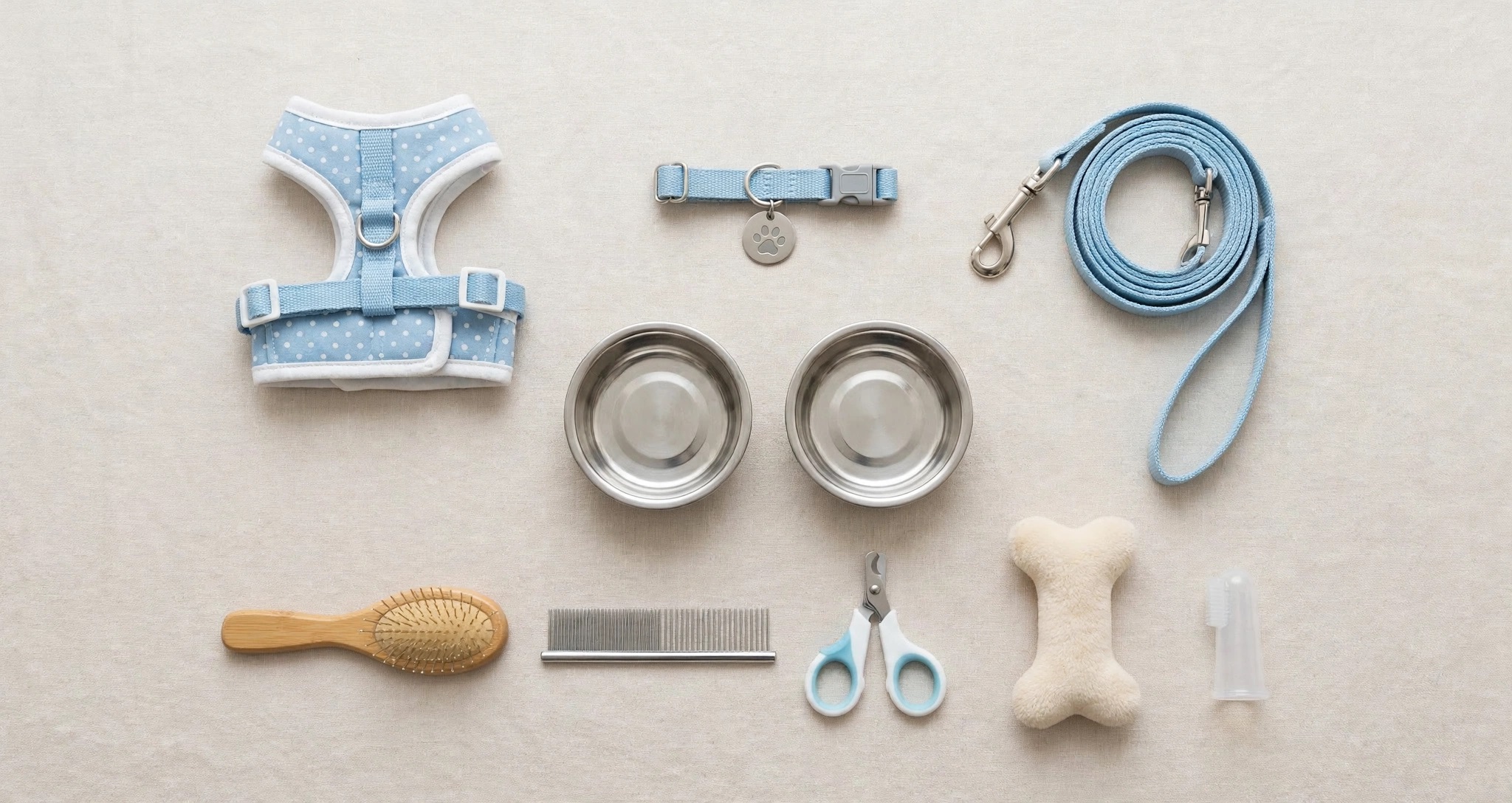
Teacup breeds vary widely in coat, so this one depends on the puppy.
For long single coats, meaning Yorkies, Maltese and similar: a pin brush, a metal greyhound comb, detangling spray and small blunt scissors. Brush daily. These coats grow continuously, do not shed out, and mat close to the skin within days.
For double coats, meaning Pomeranians and similar: a slicker brush and an undercoat rake. Brush several times a week.
For short coats, meaning Chihuahuas and similar: a soft bristle brush and a rubber grooming mitt. Weekly is plenty.
Across all types, you need small nail clippers or a nail grinder. Toy breed nails grow fast and a tiny dog with overgrown nails changes their gait, which affects developing joints.
Not optional for a teacup puppy, despite appearing on most lists as an accessory.
A three-pound puppy jumping off a standard eighteen-inch sofa is dropping six times their own body height. Patellar luxation, where the kneecap slips out of position, is a well-known concern across toy breeds, and repeated hard landings contribute to it. A single bad landing in a dog this delicate can cause a fracture.
Buy pet stairs or a small ramp, $30 to $55, and put a thick rug or mat on the floor beside any seating the puppy has access to.
A soft carrier with a rigid base, $30 to $50. Teacup puppies are genuinely portable and a good carrier is how you take them places safely. Rigid base, good ventilation, a secure internal clip.
Non-slip runners, $25 to $50. Boca Raton homes are overwhelmingly tile. A teacup puppy scrambling on polished tile has no traction, and the splayed-leg scramble that follows puts real stress on developing hips and shoulders. Lay washable runners along the routes the puppy uses most: crate to door, bedside to hallway.
A snuffle mat or lick mat, $18. Toy breeds are bright and prone to barking when understimulated. Food-based enrichment is the cheapest solution available.
A dental kit, $15. Toy breeds carry a full set of teeth in a very small jaw, which means significant crowding and fast plaque accumulation. Dental disease is among the most common health problems in small breeds. Start in week two with a finger brush and dog-specific toothpaste. A puppy who accepts it at three months accepts it for life.
A lightweight sweater, $18. Florida is warm, and Florida also runs air conditioning at temperatures a three-pound dog finds genuinely cold, plus the occasional January cold snap. One light layer for indoor use is more useful here than a winter coat.
A playpen, $45 to $70. Worth strong consideration. A six-by-six enclosed area can be made completely hazard-free in a way a whole home cannot, and for a puppy this small the list of household hazards is longer than most people realize. 3 Rooms You Must Puppy Proof is a useful companion read for working out which spaces to address first.
| Item | Standard puppy list | Teacup adjustment |
| Crate | 30 to 42 inches | 18 to 22 inches |
| Leash attachment | Collar or harness | Harness only, never collar |
| Collar | 1 inch, functional | Under 0.5 inch, ID tag only |
| Bowls | Standard depth | Shallow, wide, low-sided |
| Meals per day | Two | Three to four, never 6+ hour gaps |
| Kibble | Standard size | Small-breed formula, small kibble |
| Chews | Nylon, antler, bone | Soft rope and plush only |
| Furniture access | Optional ramp | Stairs or ramp, non-negotiable |
| Flooring | Not a consideration | Non-slip runners needed |
| Treat size | Standard training treats | Broken to rice-grain size |
| Clothing | Winter coat | Light indoor layer for AC |
| Carrier | Optional | Genuinely useful |
The two rows that carry real health consequences are the leash attachment and the meal frequency. Everything else on that table is comfort and fit.
A large bag of training treats. A teacup puppy eats a tiny volume, and treats need breaking into pieces roughly the size of a grain of rice to avoid overfeeding. Buy small; a large bag goes stale.
Hard chew toys. Antlers, hard nylon bones and dense rubber are a tooth fracture risk in a toy breed. Not worth it.
A retractable leash. Poor control, and the jolt when a small dog hits the end of the line transmits straight through a delicate neck and spine.
An elevated feeding stand. No function at teacup height.
A full-size premium bed immediately. Buy one cheap and washable first; the chewing phase claims most first beds.
Clothing beyond one practical layer. Fun rather than functional, and sizing is a guess until the puppy stops growing.
A full winter wardrobe. This is South Florida.
Our broader guide to 5 Things You Need for Small Dog Breeds covers the essentials across toy breeds generally, which is a good cross-check against this list.
| Category | Before pickup | First month | Running annual |
| Crate and bedding | $50 | $25 | $40 |
| Walking gear | $42 | $20 | $30 |
| Bowls and feeding | $18 | $18 | $380 food |
| Grooming tools | $45 | $15 | $600 to $800 professional |
| Cleaning and potty | $40 | $30 | $280 |
| Toys and enrichment | $28 | $35 | $150 |
| Safety and flooring | $45 | $75 | $25 |
| Dental | 0 | $15 | $60 |
| Total | ~$268 | ~$233 | ~$1,565 |
The grooming figure assumes a long-coated breed needing professional work every five to six weeks. A short-coated Chihuahua runs far less. Worth knowing the number before committing rather than discovering it in month three.
The habit that protects a teacup puppy most costs nothing: learn to shuffle your feet rather than lifting and placing them when the puppy is near you.
Being stepped on is among the leading causes of injury in toy breeds, and no product prevents it. Shuffle when you know the puppy is underfoot. Put them in their pen when you are cooking, carrying things, or moving quickly. Teach everyone in the household to look down and announce movement.
Bed choice is worth a moment too, since a puppy this small sleeps eighteen to twenty hours a day and the bed sees more use than almost anything else you buy. What to Look For When Buying a Dog Bed covers the bolster versus flat versus orthopedic question, which is worth settling before you upgrade from the cheap first bed.
A workable small dog puppy checklist differs from a standard one in a handful of specific, consequential ways. Buy the crate small. Buy a harness and never clip a leash to the collar. Buy small-breed food and feed three to four times a day rather than twice. Buy stairs for the sofa. Lay runners on tile. And skip the hard chews, the retractable leash and the oversized treat bag entirely.
Get the harness, the feeding schedule and the furniture access right and you have covered the three areas where a mistake creates a health problem rather than an inconvenience. The rest is comfort, and comfort can be adjusted as you learn your puppy.
Bringing home a teacup or toy breed puppy in the Boca Raton area? The team at Waggs to Riches can tell you exactly what your puppy has been eating and how often, what their coat type means for grooming, and what adult size to expect based on their parents. All of that makes this list much easier to work from. Come visit us, meet the puppies, and bring your questions.
What size crate does a teacup puppy need?
An 18 to 22 inch crate. Adult teacup breeds typically weigh three to seven pounds and need only enough room to stand, turn and stretch out. A larger crate is counterproductive, because a puppy with excess space will use one end as a bathroom, which undermines crate training entirely. Use a divider panel if the only crate you have is bigger.
Why can’t I use a collar to walk a teacup puppy?
Toy breeds carry an elevated risk of tracheal collapse, a weakening of the cartilage that supports the windpipe, and leash pressure on the throat is a recognized contributing factor. Use a step-in or vest-style harness that spreads pressure across the chest. Keep a narrow collar on the puppy for the ID tag, but never attach a leash to it.
How often do teacup puppies need to eat?
Three to four small meals a day for the first several months, and never more than five or six hours between meals. Teacup puppies have almost no fat reserves and very fast metabolisms, which makes them genuinely vulnerable to low blood sugar. Weakness, trembling or disorientation in a young toy breed puppy often means they need food promptly.
Do I really need pet stairs for a small puppy?
Yes, more than for a larger dog. A three-pound puppy jumping off an eighteen-inch sofa is dropping six times their body height. Patellar luxation is a known concern across toy breeds, and repeated hard landings contribute to joint stress, while a single awkward landing can cause a fracture. Stairs or a ramp, plus a thick rug beside any seating, meaningfully reduces that risk.
Can teacup puppies have regular chew toys?
Not hard ones. Antlers, hard nylon bones and dense rubber chews present a real tooth fracture risk for a toy breed jaw. Stick to small plush toys, small rope toys and soft rubber. Also avoid anything with small detachable parts, since a swallowing hazard for a three-pound dog is much smaller than for a sixty-pound one.
Should I use potty pads for a teacup puppy in Florida?
It is a reasonable primary setup here. A very small puppy needs to go roughly every forty-five minutes when awake, which is a significant logistics problem from a condo several floors up. And from May through September, Florida pavement reaches paw-burning temperatures during daylight hours. Many toy breed owners here run an indoor option year-round and go outside in the cooler months.
Why does bowl depth matter for a small dog?
Because a standard-depth bowl requires a three-pound puppy to put their whole face below the rim, which is uncomfortable and, for a long-coated breed, leaves a wet food-caked chin after every meal. Shallow, wide, low-sided stainless bowls solve it for about twelve dollars. Skip elevated stands, which serve no purpose at this height.
How much should I budget for a teacup puppy’s first month?
Around $270 before pickup and another $230 across the first month, so roughly $500 for a complete setup. The recurring cost that surprises people most is professional grooming, which for a long-coated toy breed runs $600 to $800 a year at five to six week intervals. Short-coated breeds like Chihuahuas cost considerably less.
This store is awesome. They have a huge selection of collars and toys for dogs all sizes.
~ Jose Pretel
Monday-Saturday 11-6
Sunday 12-4
Copyright © 2026 Waggs To Riches Pet Boutique. Developed by Wyne Technologies LLC .