
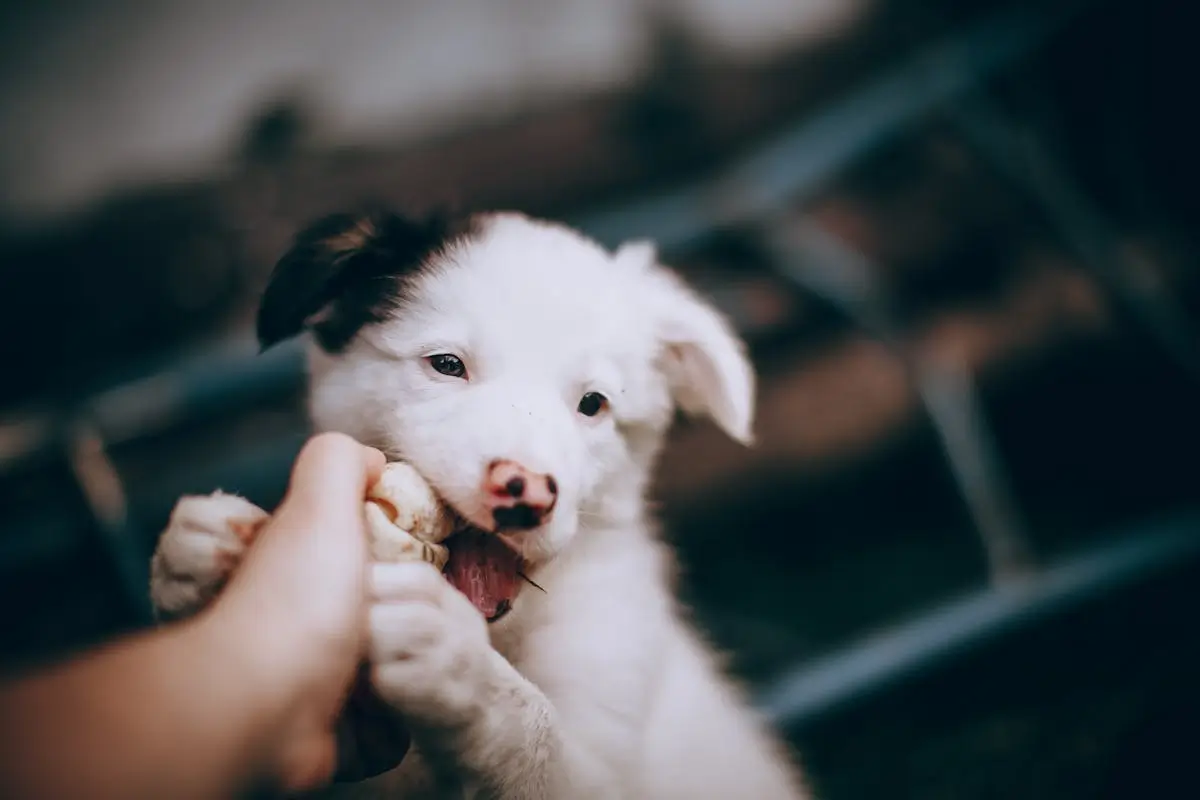
Puppies are bundles of energy, curiosity, and… sharp little teeth. One minute, they’re cuddling, and the next, they’re gnawing on your fingers like they’re tiny sharks. Sound familiar? Don’t worry, it’s completely normal—but it’s also something you want to manage early before those playful bites turn into a habit.
This guide will help you understand why puppies bite and give you natural, effective strategies to stop puppy biting without punishment or stress.
Before stopping the behavior, it’s important to know why your puppy is biting.
Just like human babies, puppies go through teething. Their baby teeth push out adult teeth, making gums sore. Chewing helps relieve this discomfort. Mouthing, or gentle biting, is their way of exploring the world, playing, and learning boundaries.
Puppies often bite during games like tug-of-war or fetch. They don’t mean harm—they’re just having fun.
Sometimes puppies nip to get your attention. Even a negative reaction can reinforce the behavior if it earns a response.
A frightened puppy may bite as a defensive reaction. Understanding body language helps prevent fear-related biting.
Puppies explore everything with their mouths. Chewing helps them understand textures, objects, and even people.
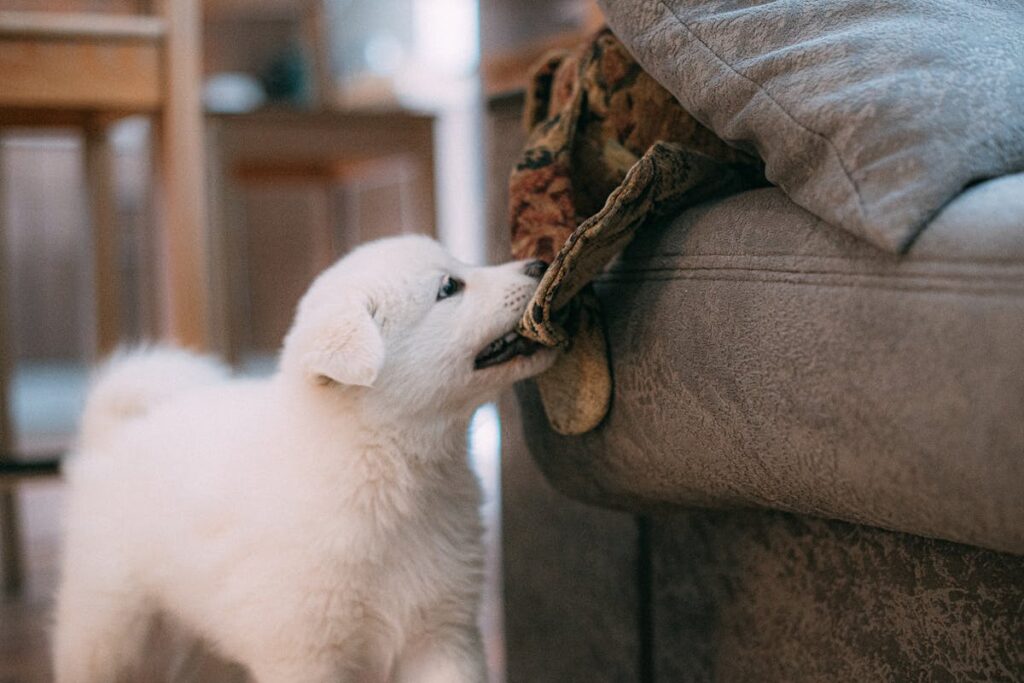
Playful nips are normal, but repeated biting during play can signal a need for training.
Hard bites that leave marks are not acceptable and should be addressed immediately.
If your puppy bites when being picked up, groomed, or examined, it may indicate fear, discomfort, or lack of boundary training.
Unchecked biting can lead to future aggression in adult dogs.
Teaching bite inhibition early protects children and other family members.
Learning to control their mouths is a key part of a puppy’s social development.
Reward good behavior with treats, praise, or play. For example, when your puppy chews a toy instead of your hand, immediately give attention or a treat.
Always have chew toys ready. Redirect nipping to these toys. Over time, your puppy will learn that toys are for chewing, not human skin.
When bitten, let out a high-pitched “ouch” and stop interaction immediately. This mimics how littermates teach bite inhibition naturally.
If your puppy continues to bite, calmly place them in a short time-out for 30–60 seconds. Avoid yelling or physical punishment.
Everyone in the household must follow the same rules. Inconsistent responses confuse the puppy and prolong biting behavior.
Rough play encourages aggressive biting. Stick to gentle games and avoid tugging with hands.
Teach your puppy to control the strength of their bite by rewarding gentle mouthing and stopping play for hard bites.
Puzzle toys, treat-dispensing toys, and chew toys keep puppies mentally stimulated and reduce nipping out of boredom.
Controlled interaction with other puppies teaches bite inhibition naturally. Supervised play helps them learn boundaries.
Taking your puppy to various environments reduces fear-based biting and teaches calm behavior in new situations.
While most puppies improve with consistent guidance, some may continue to bite aggressively despite your best efforts. Persistent aggression can be concerning and often signals underlying issues such as fear, pain, frustration, or a temperament that needs specialized attention.
Puppies exhibiting this behavior may growl, snap, or even attempt to bite without clear provocation, which can be alarming for owners and risky for family members or other pets.
Some puppies bite not out of playfulness, but because they are scared or anxious. Fear-based biting often happens when a puppy feels threatened, cornered, or overwhelmed by a new situation. For example, a puppy might snap when being picked up suddenly, when loud noises occur, or when unfamiliar people or animals approach too quickly.
Hitting or yelling can increase fear and worsen biting. Always use gentle, natural methods.
Every family member must respond the same way to biting. Mixed signals confuse the puppy.
Loud reactions can excite the puppy or make them anxious, reinforcing the behavior.
Provide a variety of textures to soothe gums and redirect chewing.
Use small, tasty treats to reward non-biting behavior immediately.
Clicker training works well to mark good behavior and reinforce bite inhibition.
Remember, biting is normal. Patience is key as puppies learn boundaries.
Puppies bite less over time, but they need guidance and consistency.
Short, consistent training sessions prevent frustration and improve learning.
Puppy biting is a natural stage, but it can be managed effectively with patience, consistency, and natural techniques. By understanding why your puppy bites and using positive reinforcement, redirection, and gentle correction, you can teach bite inhibition, protect your family, and raise a well-mannered adult dog.
Remember, a little patience now saves a lot of frustration later—and your hands too!
Use positive reinforcement, redirect to toys, and apply time-outs or the “ouch” method consistently.
Yes, biting is normal during teething and exploration, but it should be taught to stop gently.
Absolutely. Rough play encourages puppies to bite harder, so gentle play is essential.
Most puppies improve by 6–7 months old with proper training and socialization.
If biting becomes aggressive, persistent, or fear-based, consult a trainer or behaviorist.
This store is the best! I get my poodle groomed here and Lynn does a great job. The store smells really good and the puppies are so cute. I highly recommend you shop at Waggs.
~ Dylan Morris
Monday-Saturday 11-6
Sunday 12-4
Copyright © 2026 Waggs To Riches Pet Boutique. Developed by Wyne Technologies LLC .